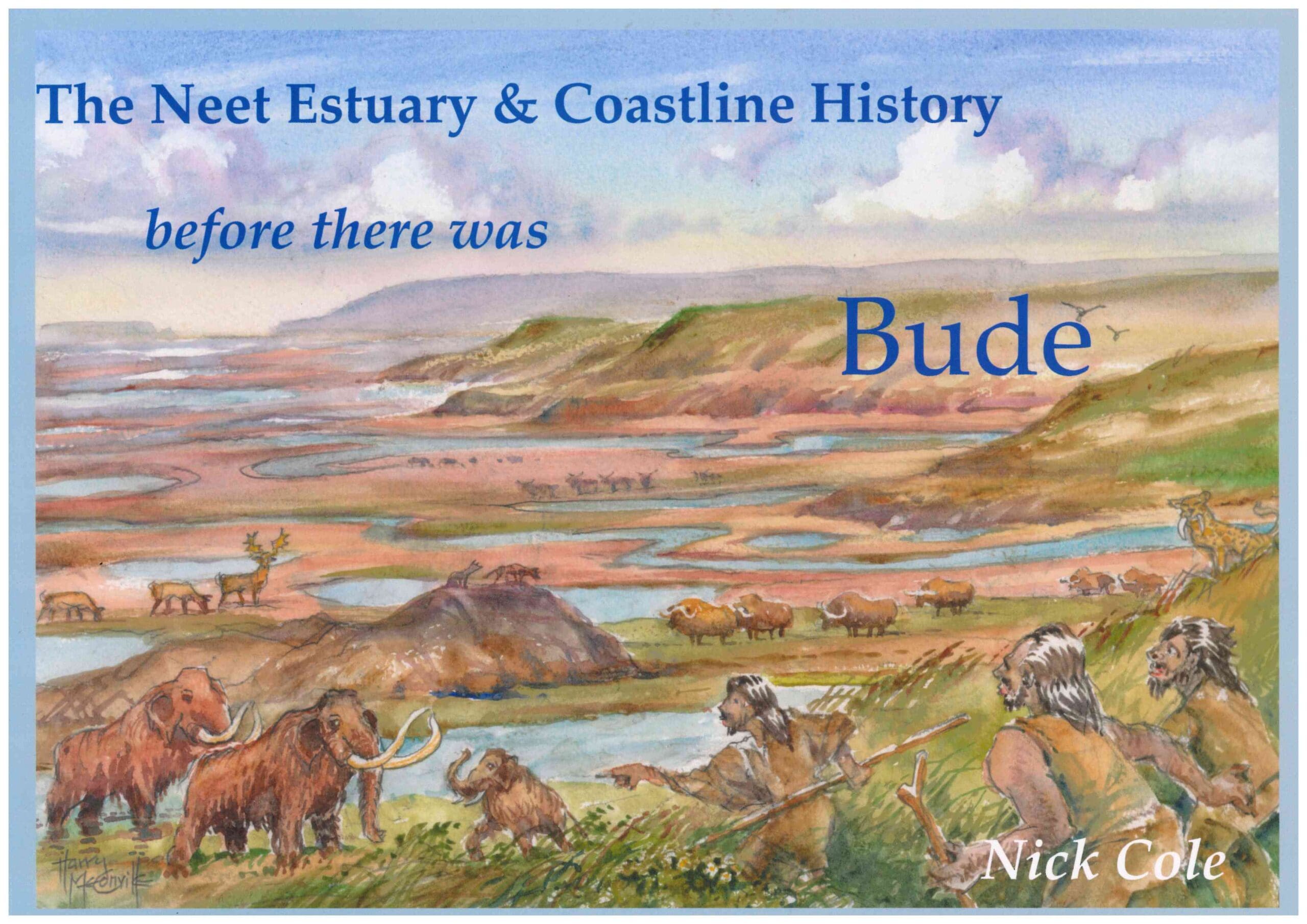
Description
This is a prequel to the author’s previous book, “Bude’s Tide Mill and Bridge” and takes the local story back to the Ice Ages, which set the prehistoric foundation for all that followed. The local story then weaves its way through our prehistory and Medieval periods, blending the national with the local, through to the mid-sixteenth century.
The story reveals a region blessed in many ways by its location on a coastline favoured by the warmth of the Gulf Stream and on the maritime trading highway of the times. It reaveals a region comprised of semi-autonomous valley communities defined by natural boundaries, some facing west and the sea, other east and the Tamar Valley; each valley having their own climate, offering produce variability and trading opportunities. This created an interdependence that may have brought about cultural stability.
Strategically, the region was pivotal, bounded as it is by the sea, the Tamar and the moors; Cornwall could not be defeated unless crontrol of the northeast could be secured and this arguably led to the region having three powerful leaders or warlords forming the region that was referred to as “Pagus Tricurius”, which became Trigg. Did this lead to the legend of King Arthur and the mystique of Tintagel, which ultimately attracted the later earls of Cornwall, the sons of Kings and the aristocracy of Britain?
Ultimately, King Egbert battled his way here around 815 AD and having control of the northeast felt safe to enter deeper into Cornwall and defeat the Cornish and Danes at Hingstone Down.
There are a number of new artistic impression of this early period, including one of Binhamy moated manor house. Plus, an exploration into the history of the Blanchminster and other notable local figures of the Medieval period that contributed so much to the development and history of Stratton and Bude.
Hardback – can be collected from the Bude TIC (£24.99) or posted to you (£29.99)


Reviews
There are no reviews yet.